The Best Personal Brands Know When to Exit Stage Left
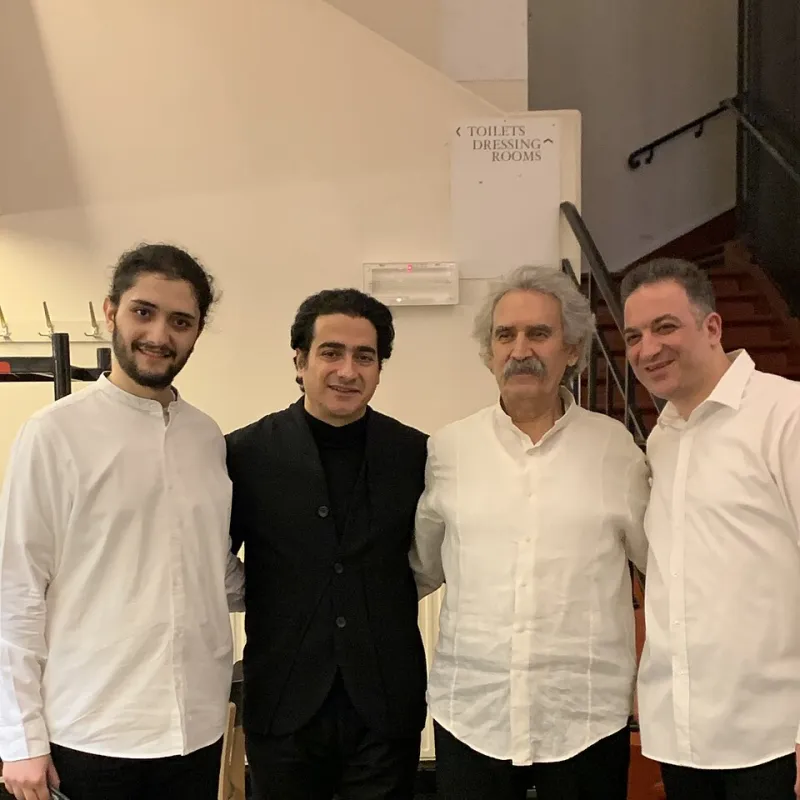
Photo: Pournazeriacademy, CC BY-SA 4.0, via Wikimedia Commons
There is a particular kind of silence that falls over a British group chat when someone announces they are 'stepping into their main character era'. It is the same silence that greets a LinkedIn post about 'lessons from my journey' or an Instagram caption explaining that this year is about 'choosing me'. Everyone reads it. Nobody knows where to look.
I say this with love, because I have been that person. Last autumn I had a personal-brand phase. I rewrote my bio three times in a week. I started using the phrase 'my audience' without irony. I even bought a ring light, which is now gathering dust behind the spare-room door like a tiny monument to my own effort. The problem wasn't that I wanted to be seen. The problem was that I had confused being seen with being memorable.
The performance no one bought tickets for
Main character energy sounds empowering, and in small doses it is. It asks you to stop shrinking, stop apologising for taking up space, stop waiting to be picked. Lovely. But somewhere along the way it curdled into a full-time performance. Your career becomes a storyline. Your friendships become supporting roles. Your online presence becomes a highlight reel with better lighting than your actual living room.
In the UK, this sits awkwardly next to our national instinct to deflect compliments and talk about the weather. We are a country where 'not bad, thanks' can mean anything from 'I am thriving' to 'I have been crying in the Sainsbury's car park'. Grand declarations of selfhood make us squirm. Yet the pressure to have a personal brand is real, especially if you work in a creative field, run a small business or simply exist online. So we end up doing main character energy badly: half boastful, half apologetic, all exhausting.
The result is a strange kind of blandness. Everyone is the lead, so no one is listening. Every post is a monologue. Every conversation becomes a chance to angle the spotlight back to yourself. It is not compelling. It is just loud.
What theatre understands about presence
Theatre has a useful corrective. In a play, the lead is not automatically the most interesting person on stage. The ensemble creates the world. The scene partner who actually listens can make a monologue land. The stage manager, the lighting cue, the person who moves a chair in the dark — none of these are the star, but without them the whole thing collapses.
Think about the actors you remember from a production. Often it is not the one with the most lines. It is the one who reacted. The one who made the person opposite them seem funnier, sadder, more alive. That is a skill. It requires attention, timing and a willingness to let someone else have the moment. It is also, I would argue, the most underrated personal brand there is.
I have started calling it supporting-cast energy, though I am aware that sounds like a theatre workshop run by a life coach. The idea is simple: instead of asking 'How do I make this room about me?', ask 'How do I make this room better?' It is not about shrinking. It is about being deliberate with your presence.
The supporting-cast experiment
I tried this for a month. In meetings, I stopped rehearsing my clever interjection and started listening for the point where I could add something useful. In group chats, I asked one more question before I sent a voice note about my own day. When I posted online, I asked whether the thing I was sharing would help someone else or just polish my own little statue. Some posts failed the test and stayed in drafts. That was fine.
The effect was subtle, but real. People began to ask my opinion more, not less. A colleague told me I was 'good in a crisis', which is the highest compliment a British person can receive after 'you brought biscuits'. I felt less like a brand and more like a person. And weirdly, my online presence became easier because I stopped trying to be the main event.
Three prompts I use before I post, speak or host
Before I hit publish or walk into a room, I run a quick internal check. These are not rigid rules. They are more like stage directions.
First: whose scene is this? If a friend is telling a story, my job is to be a good audience, not to top it with a funnier anecdote. If I am running a meeting, my job is to make the room feel clear, not to prove I am the cleverest person in it.
Second: what is the cue? Theatre runs on cues. In real life, a cue might be someone hesitating, a colleague going quiet, a friend saying 'I'm fine' in a very specific tone. Supporting-cast energy means noticing the cue and responding to it, rather than bulldozing ahead with your own script.
Third: would I say this if no one clapped? If the answer is no, it probably belongs in a journal, not a caption. That is not to say you should never share good news. You should. But there is a difference between sharing and performing. You can usually feel it in your shoulders.
The room remembers how you made it feel
The best personal brands are not the ones that shout the loudest. They are the ones that leave a warm room behind them. The friend who remembers how you take your tea. The colleague who credits your idea in front of the boss. The person online who shares something useful without reminding you to be impressed.
Main character energy had a good run. It gave a lot of us permission to stop hiding. But in 2026, with every feed full of people declaring their next chapter, the more radical move might be to become excellent supporting cast. Show up. Know your cues. Let someone else have the punchline. The strange thing is, people will remember you for it.