The £0 Third Place: What a Month of Library Mornings Did to My Taste, My Calendar and My Personal Brand
The library card arrived in a paper wallet, the kind that feels like it should come with a stamp and a stern look. I had joined on a whim, tired of treating coffee shops like unpaid offices and tired of the low-level maths that comes with it: one flat white, one small bottle of water, one square of banana bread, and suddenly I had spent £9.40 to sit still for an hour. This winter already feels priced-up and a bit performative. I wanted a third place that wasn’t the pub, the gym, or another branch of Pret. So I gave myself a month of library mornings.
The joining bit was almost insultingly easy
I walked in, showed proof of address, filled in a form, and walked out with a card. No direct debit. No onboarding sequence. No loyalty scheme pretending to be a friendship. The woman behind the desk asked if I wanted to reserve anything. I said no, then changed my mind at the door and went back. The reservation charge was less than a bag of crisps — a few pence to a pound depending on your council — and the book would be waiting for me at the front desk within days.
That was the first surprise: the library is not a passive building you drift into when the rain gets heavy. It is a system, and a very good one. You can request titles from across the borough, renew online, print a form, read the papers, attend a local author event, or simply sit in a warm room without anyone expecting you to buy a second drink.
A third space with no minimum spend
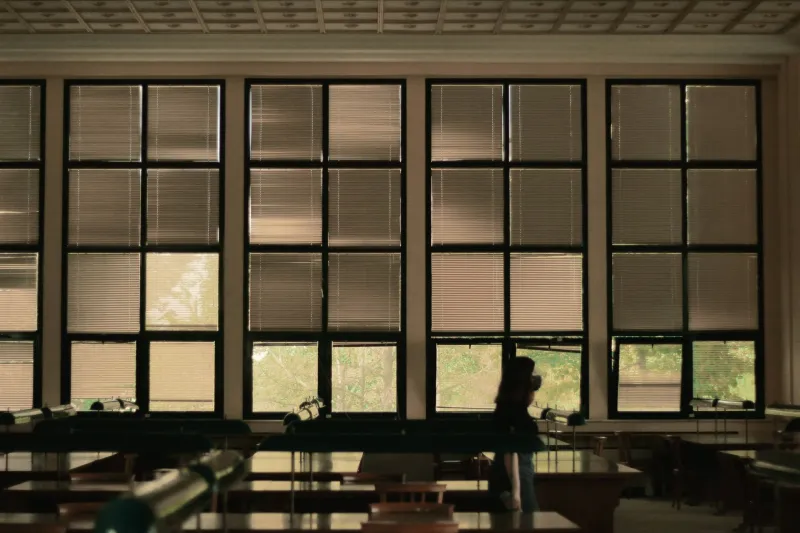
The reading room in my local branch has long tables, brass-angle lamps and a view of a car park that is somehow comforting rather than bleak. There is a retired man who reads the financial pages with a pencil in his hand. There is a student with three highlighters and a look of quiet panic. There is a mum with a toddler who has clearly worked out that the children’s section is the only place in town where nobody tuts.
Nobody is pitching anything. Nobody is asking what you do. Nobody is building a personal brand in the corner. And that, it turns out, is the point. A personal brand is not a logo or a LinkedIn headline. It is what you do when no one is buying. The coffee shop encourages display: the right laptop, the right notebook, the right angle. The library encourages attention. It asks you to sit down, be quiet and let something other than your own reflection hold your gaze for a while.
What it did to my taste
Borrowing instead of buying made me less loyal to the algorithm. In a bookshop I gravitate towards covers I have already seen online. In the library I picked things up from the returns trolley, the staff picks shelf and the display table near the door. I read an essay collection I would never have paid £14.99 for, a crime novel with a terrible cover, and a local history book that made my own street feel more interesting than it has any right to be.
Taste gets wider when it is cheap. The reservation queue is a form of patience, too. You request a book, you wait, you forget about it, and then a small email arrives to say it is ready. There is something deeply unglamorous and deeply good about that. It slows the whole business of wanting down.
The calendar got quieter
I started going on Tuesday and Thursday mornings. Not for long — an hour, maybe ninety minutes. I put my phone in my bag. I wrote notes by hand. I read two chapters and then stared into the middle distance like a person in a black-and-white film. The hour had edges. It began and it ended. That sounds small, but most of my week does not have edges. It has notifications.
By the second week I had stopped narrating the experiment to myself. I was not “having a library era”. I was just going to the library. That is a different kind of personal branding: reliability, calm, a tote bag with a book in it, a Tuesday ritual that does not need an audience.
People-watching as research
One Thursday there was a local author event in the community room. Folding chairs, instant coffee, about twenty people, a stack of books on a table by the door. The author talked about writing in the gaps between paid work and never quite knowing if anyone was reading. Nobody clapped too hard. Nobody filmed it. It was, in the best possible way, a non-event.
I bought nothing. I borrowed the book afterwards instead. But I left thinking about how much of a personal brand is just showing up warmly in small rooms. The library newsletter lists author talks, book groups, craft sessions and coffee mornings. It is the most low-key social calendar in Britain, and it is sitting there behind the glass door, waiting for you to notice.
The practical bits I wish I had known
IT IS FREE TO JOIN, but you will usually need proof of address. Different councils run different systems, so check your local library website before you go.
RESERVATIONS OFTEN COST A SMALL FEE. It varies by council, but it is usually less than a coffee. You can request books from other branches and collect them at your nearest desk.
NOT EVERY LIBRARY IS A SILENT OFFICE. Some have noisy children’s areas, some have quiet rooms, some have warm-space hours and free water. Read the room. If you are taking calls, step outside or ask at the desk where the talking zones are.
EVENTS ARE THE SECRET WEAPON. Local author talks, reading groups and craft mornings are usually listed in the newsletter or on the council website. They are cheap, warm and full of people who are not trying to impress anyone.
RETURN YOUR BOOKS. Renew online if you can. Someone else is waiting, and the whole lovely system depends on you not being a diva about deadlines.
The personal-brand bit
I did not post about any of this. No carousel of me holding a hardback in a shaft of winter light. But something shifted. I became someone with a Tuesday ritual, a borrower’s patience and a slightly better relationship with my own attention. The card in my wallet is proof of a decision I made when I was tired of paying to exist in public.
If your winter feels priced-up and performative, join your local library. Take out a book. Sit in the reading room. Go to the author event with the folding chairs. Be a person in a warm room, with no minimum spend and no need to explain yourself. The card is free. The quiet is the luxury.