Beyond the Pub: Why Britain’s Best Nights Out Now Cost Nothing to Get In
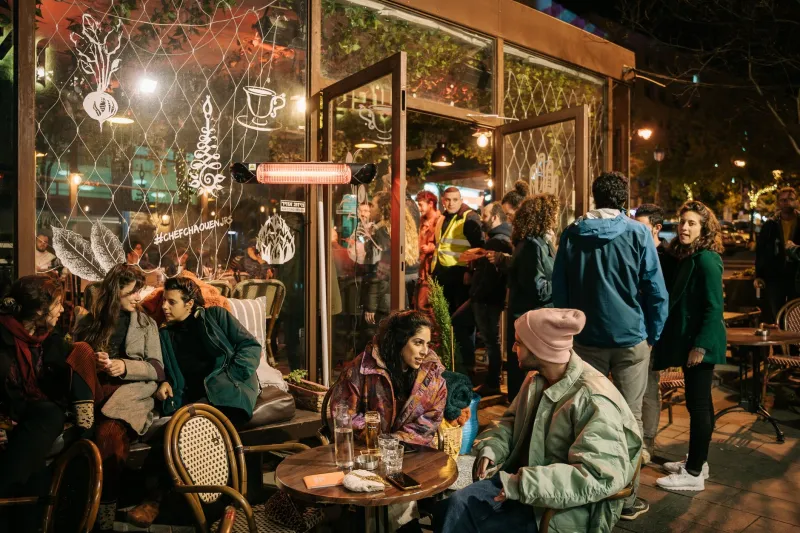
There is a specific kind of November evening in Britain when the pub stops feeling like a treat and starts feeling like a transaction. Eight pounds for a lukewarm pint. Music you have to shout over. A taxi home that costs more than the drinks did. So when a friend suggested we meet at the library instead — a Thursday, seven o’clock, in a city neither of us lives in — I said yes out of pure curiosity, expecting to be turfed out within the hour.
We stayed for three. Nobody asked us to leave. Nobody asked us to buy a second round. We talked about her mum, my job, a book we’d both half-read, and the slightly insane price of halloumi. It was, hand on heart, one of the better evenings I’ve had this autumn.
It isn’t nostalgia — it’s arithmetic
The American sociologist Ray Oldenburg coined the phrase ‘third place’ back in 1989 to describe the spaces that are neither home (first) nor work (second): cafés, barbers, parks, church halls, the bench outside the corner shop. His argument was simple and, decades later, still annoying in how right it feels — a functioning community needs somewhere to gather that isn’t tied to earning or spending.
For a long time in the UK, that place was the pub. And the pub hasn’t gone anywhere, bless it. But the way we use it has shifted. A generation priced out of a casual Wednesday pint is quietly rediscovering the alternatives, and not in a hair-shirt, worthiness-is-the-point kind of way. The new third places are warm, well-lit, faintly social, and — crucially — free or close to it.
There’s a loneliness angle here, obviously. There’s a cost-of-living angle too. But the more interesting thing is the mood. People don’t seem to be looking for somewhere to get drunk any more. They’re looking for somewhere to linger.
What actually counts as a third place
Not every café qualifies. Oldenburg’s checklist was fairly strict, and it holds up: a good third place is neutral ground, it’s easy to get to, conversation is the main activity, regulars set the tone, it’s low-key, and it feels like a home from home. You should be able to turn up alone and not feel like a weirdo.
Apply that test and some surprising winners emerge.
Late-opening libraries. Several UK library services have been stretching their hours into the evening, and the result is genuinely lovely — students, retirees, people on laptops, teenagers not being moved on. Turn up, read the paper, do a crossword, exist near other humans for free.
Community lidos. Even in November, the cold-water crowd is out in force. Tooting Bec, Bristol, Cleveland Pools in Bath, the sea pool at Bude. There is something almost aggressively social about shivering together at 7am. Membership is usually cheaper than a gym, and nobody has ever tried to sell me a protein shake at one.
Alcohol-free cafés and dry bars. Club Soda in London, The Brink in Liverpool, and a growing sprawl of sober-curious pop-ups in Manchester, Leeds, Glasgow and Cardiff. The whole point isn’t what’s missing from the glass — it’s that you can stay until closing without doing the mental maths on your last train.
Run clubs, board game cafés, repair shops, choir. The unglamorous stuff. The stuff that sounds slightly naff until you try it and realise everyone there is having a better time than the people queuing for a club.
The unofficial rules of a good third place
A few things I’ve noticed from a year of consciously choosing these over the usual:
- Go on a weeknight. Saturdays are for the pub people. Tuesdays belong to the regulars.
- Order something small, or nothing. Nobody’s counting, and that’s the whole point.
- Talk to one stranger. Not in a networking way. In an ‘is this seat free’ way.
- Leave your headphones in your bag for the first twenty minutes. Yes, really.
- Become a face. Third places reward repetition more than enthusiasm. Two visits beat one big night.
Three to try before the year is out
You don’t need a directory. You need one afternoon of being nosy. Search your council’s library page for extended hours — several sites now open until 8pm or later on weekdays. Look up your nearest lido or open-water swim and find out whether they run winter sessions (many do, with hot drinks afterwards). And if you’re sober, sober-curious, or simply the designated driver more often than you’d like, check whether there’s an alcohol-free bar or monthly meet-up within a bus ride. They exist in more towns than you’d think.
Failing all that: your local church hall, community centre or working men’s club probably has something on this month that nobody has told you about. The noticeboard by the door is the most underrated social network in Britain.
What you actually get back
The honest answer is time. A pub night has a natural arc — arrive, drink, get louder, get home late, write off the next morning. An evening in a library or a café has no arc at all, which is exactly why it works. You leave when you’re ready, and you leave with something better than a hangover: a conversation you can actually remember.
We are allowed to want nicer things than a cheap night out. We’re also allowed to want cheaper things than a nice night out. Somewhere in that gap is a table by a window, a slightly chipped mug, and someone you like sitting opposite you, talking nonsense until the staff start stacking chairs.
Go and find yours. This month, not next year.