Six Chairs and a Shop-Bought Tart: What Hosting Like Yourself Actually Looks Like
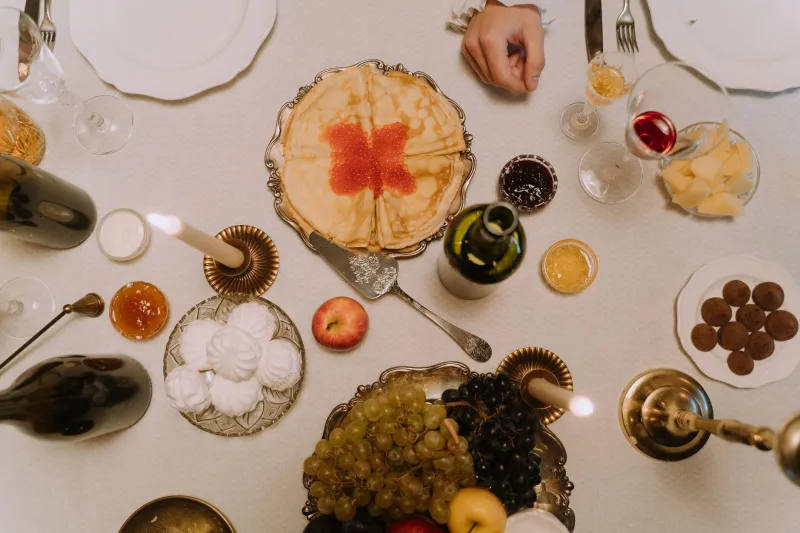
There is a particular kind of November drizzle that makes a flat feel both cosy and slightly chaotic. On a grey Friday in 2026, I stood in my kitchen with six chairs borrowed from various rooms, a pot of something slow-cooking on the hob, and a shop-bought tart waiting in its box. I had invited five people for dinner. Not a supper club. Not a content opportunity. Just dinner.
But somewhere between lighting the first candle and deciding whether the playlist was too obvious, I realised I was doing something I usually only do on paper: building a personal brand. Not the LinkedIn kind. The real kind — the atmosphere you create when nobody is asking you to perform.
The guest list is a boundary, not a popularity contest
My first instinct was to invite eight. Then ten. Then possibly everyone I had ever met and liked in a vague, sentimental way. I am a person who says yes first and calculates the emotional logistics later. This time, I stopped at six.
Six meant one table, one conversation, one pot, and enough chairs without dragging the bedroom furniture into the living room. It also meant I could actually speak to everyone. That sounds obvious, but it is surprisingly rare. A personal brand is often described as what you stand for. Less discussed is what you politely decline. The smaller guest list was not exclusion; it was a boundary that made warmth possible.
I sent a message the week before asking about dietary needs and energy levels. One friend was recovering from a brutal work month. Another did not drink. A third would happily eat anything but hated surprises. That small bit of admin shaped the menu more than any aesthetic mood board could. Hosting, like personal branding, starts with paying attention rather than showing off.
The playlist and the supermarket pudding are curation
I made a playlist called something deeply unglamorous like Friday Six. It opened with warm soul, moved into something low and rhythmic, and avoided the two traps of dinner-party music: jazz that makes everyone speak in hushed tones and a nostalgic pop run that turns supper into a school disco. The music was not there to impress. It was there to make the room feel held.
Then there was the pudding. I had considered making something from scratch. I had also considered, briefly, constructing a layered thing with citrus and cream that would have required three pans and a personality transplant. Instead, I bought a good supermarket tart, warmed it for fifteen minutes, and served it with vanilla ice cream and the last of the damson jam from a jar in the fridge.
Nobody gasped. Nobody asked for the recipe. They asked for seconds. That felt better.
Curation is not the same as effort for effort's sake. A personal brand can be a mismatched set of charity-shop plates, a decent candle, and one thing done properly. It can be a shop-bought tart on a nice plate. The point is not to pretend you made everything from scratch. The point is to choose what belongs in the room and let the rest go.
Warmth is a system, not a personality trait
I used to think warmth was something you either had or did not. A gift for making people feel at ease. Now I think it is closer to a system: a text the day before with the address and the nearest station; a clear spot for coats; a jug of water already on the table; one dish that can sit happily while people arrive late; and no elaborate starter that turns the host into a stressed waitress.
On the night, I did not apologise for the flat being small or the chairs not matching. I did not explain the menu before serving it. I did not announce that I was keeping things simple, which is its own form of performance. I just lit the candles, put the food down, and sat.
That last part is the whole game. A good host is present, not production. A good personal brand is the same. People remember how easily they could be themselves around you far longer than they remember the napkins.
The seating plan taught me to stop hiding
I nearly abandoned the seating plan because it felt fussy. Then I remembered that one friend was shy in a group and another could talk to a brick wall with genuine delight. Putting them next to each other was not manipulation. It was editing. It was arranging the room so fewer people had to work hard to belong.
This is the bit of personal branding I find most useful and most overlooked: you are allowed to arrange your strengths. You are allowed to put your quieter, sharper, funnier aspects in the right context rather than forcing them to perform in every room. A dinner table is a small laboratory for that. Who needs to be near the radiator? Who needs to be away from the kitchen? Who needs a job, even if it is just opening the wine?
By the time the tart appeared, the table had split into two easy conversations and one argument about whether a particular film was overrated. It was not a perfect evening. Someone knocked over a glass. I forgot to put out the bread until the main was nearly finished. But no one was performing, including me.
The aftermath is the real review
The next morning, I stood in the kitchen with a stack of plates and a half-eaten tart. No one had mentioned the playlist. No one had complimented the candles. One friend had texted to say they had not realised how much they needed a night like that. That was the review.
If a personal brand is simply the impression you leave behind, then hosting is one of the most honest ways to test it. Are people relaxed around you? Do they feel considered rather than impressed? Can you be a little imperfect without turning it into an apology?
I am not suggesting you host a dinner party to find yourself. But if you do, watch what you choose when you are tired. Watch what you stop doing. Watch what makes the room exhale. Six chairs and a shop-bought tart told me more about my own brand than a month of posting ever could.