The Corner-Shop Curriculum: What a Month of Micro-Chats Taught Me About Being Memorable
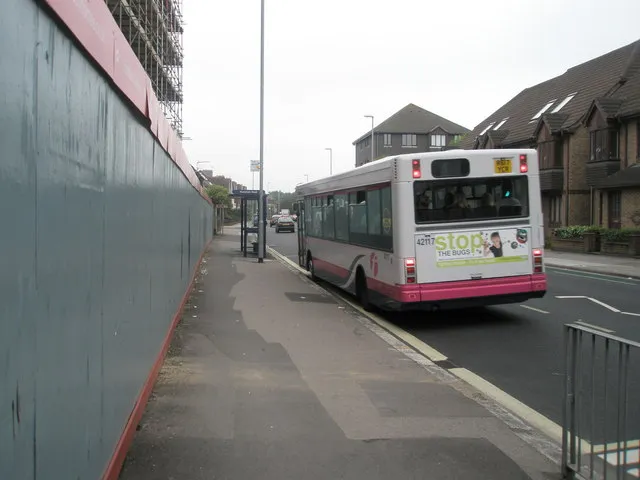
Photo: Basher Eyre, CC BY-SA 2.0, via Wikimedia Commons
The 47 bus is never on time. This is not a revelation; it is a fact of life, like drizzle and the price of a Freddo. But on a grey Tuesday at the start of November, standing under a shelter that smelled faintly of wet dog and chips, I decided to stop using the wait as an excuse to stare at my phone. For one month, I would say yes to every small exchange — at bus stops, in corner shops, in waiting rooms, in the queue at the post office. No agenda. No networking. Just the low-stakes chatter most of us bat away with a polite nod.
I kept a note in my phone. Not a journal, not a social experiment with a clipboard — just one line after each chat: where I was, what we talked about, and what the other person seemed to remember. Four weeks later, the results were more useful than any personal-brand workshop I’ve sat through.
The rules I gave myself
They were deliberately unambitious. I wasn’t trying to become the mayor of the bus stop. I just wanted to see what happens when you treat a two-minute wait as a place you actually are, rather than a gap between places.
The rules: headphones off at the stop, not in my ears but around my neck. One open question instead of a closed one. No turning strangers into contacts. And after each exchange, a single note: what stuck?
That last bit was the interesting part. Because most of us assume we’re remembered for the big things — the job, the clever comment, the fact we once lived in Berlin. The notes suggested otherwise.
What people actually remembered
A woman at the bus stop remembered that I’d laughed at the driver’s terrible joke about the weather. A man in the corner shop remembered that I always buy the same milk and say ‘see you tomorrow’ like we’re in a sitcom. Someone in a waiting room remembered that I’d recommended a bakery two streets away, and had written it down on the back of a receipt because she didn’t trust her memory.
Not one person remembered what I do for a living. Which was humbling, and also a relief.
The pattern was consistent: people remembered texture, not CVs. A specific detail. A repeated habit. A tone of voice. The small, unpolished things that make you feel like a person rather than a polite interaction. Being memorable, it turns out, is less about being impressive and more about being legible.
The bus-stop economy of attention
Waiting rooms and queues are neutral territory. Nothing is expected of you. That’s exactly why they’re a good testing ground for presence. People make tiny bids — ‘cold, isn’t it?’, ‘the 47 is never on time’, ‘three quid for a sandwich, honestly’ — and most of us swat them away with a ‘yeah’ and a glance at our phones.
The personal-brand move is not to perform. It’s to pick up the bid. ‘The 47 is never on time’ is an invitation. ‘I know — I’ve started bringing a book’ is a door. It costs almost nothing, and it turns a waiting room into a small, civilised room where two people are briefly awake to each other.
I noticed that the people I found most magnetic weren’t the loudest or the funniest. They were the ones who asked a second question. Who looked up. Who said ‘cheers’ and meant it. Who remembered that you’d said you were waiting for a parcel, and asked about it the next week. Tiny acts of continuity. That’s a brand, really. Not a logo. A pattern.
What I got wrong
I over-shared. Twice. Once, a man at the bus stop told me about his hip operation, and I countered with a story about my own knee and watched his eyes glaze over. I had mistaken conversation for a competition. The lesson: match the depth. If someone offers you a small stone, don’t hand them a boulder.
The other mistake was holding people hostage. A chat is not a trap. Some people have their earphones in for a reason. Some people are having a bad day. Reading the room — or the bus shelter — is part of the skill. A ‘no’ is not a rejection of your personal brand. It’s just a closed door. Move on.
The notes app audit
After four weeks, I had 23 micro-chats, 11 remembered details, and four genuine ‘hello’ follow-ups. The woman at the corner shop now asks after my mum. The bus driver nods at me like a colleague. Nothing dramatic. No viral moment. Just a slightly warmer version of the same life.
The most useful note was about repetition. One man remembered me because I’d said the same thing about the weather three times in a fortnight. I’d been embarrassed about it at the time — ‘haven’t I said this to you before?’ — but he laughed. ‘You’re consistent,’ he said. It was the nicest thing anyone said to me all month.
The practical bit
If you want to try this yourself, keep it small. Ask one question that isn’t about the weather. Offer one specific detail of your own — not a monologue, just a crumb. Remember one thing for next time. Say their name if you catch it. Leave before the conversation sags. And don’t turn it into a project with a spreadsheet. The whole point is that it’s ordinary.
The bus stop is a test lab. Cheap, repeatable, low-risk. You can practise being curious, being specific, being the kind of person who makes a waiting room slightly less grey. That is a personal brand, in the everyday sense. Not what you say about yourself when someone asks. What remains in the air after you’ve gone.
The 47 still isn’t on time. But now I know the driver’s name, and he knows I take milk, no sugar. In a month of small talk, that feels like a result.